

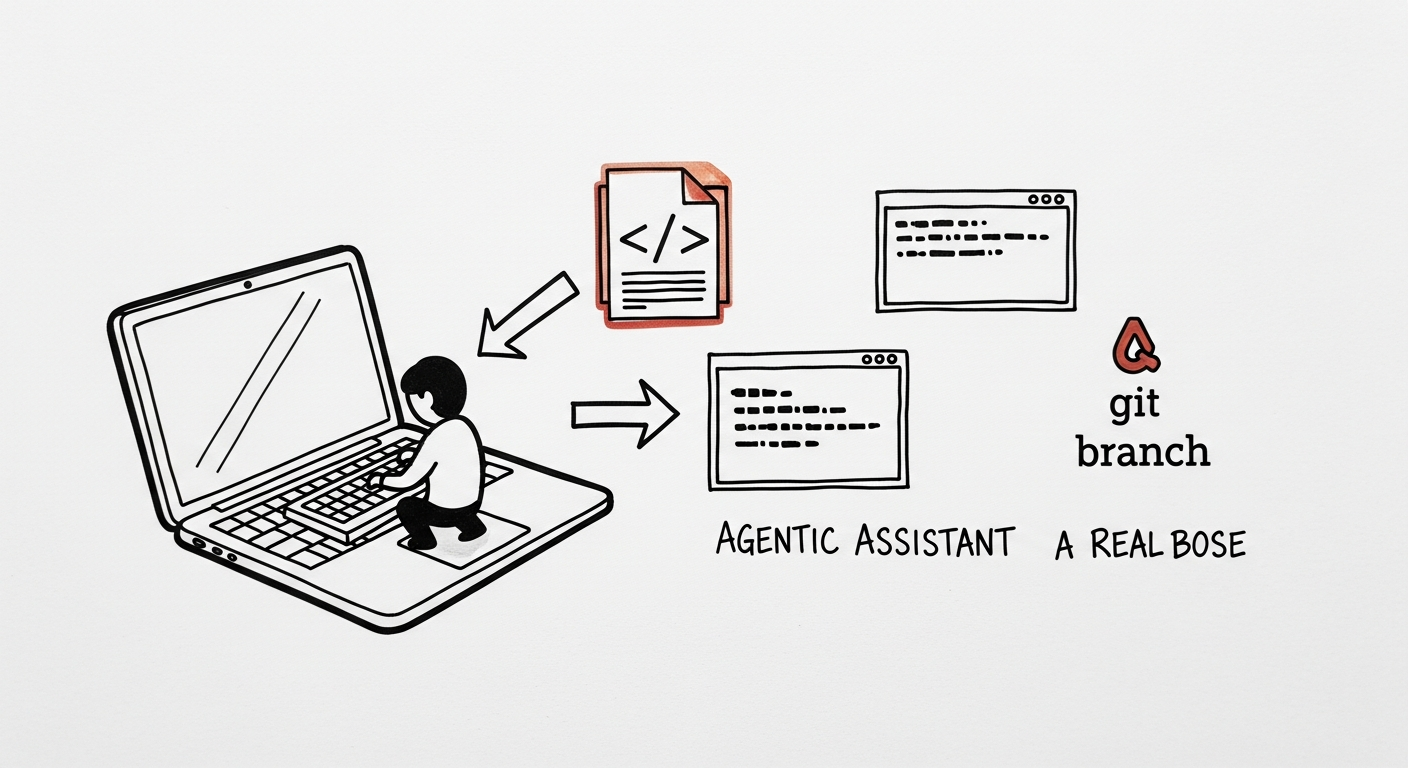
At Black Flag Design we run our client work through Claude Code every day. It is the single tool that has changed the shape of our week more than anything else in the last year. And the question we keep getting, from founders, heads of product, marketing leads, curious partners, is the same one: what actually is this thing?
If you have heard engineers on your team say the words "Claude Code" and nod along without being sure what you are agreeing to, this one is for you. No jargon without a quick definition. No hype. Just a straight explanation of what it is, why it is different, and where it fits.
1. It is an assistant that actually uses your tools, not just talks about them
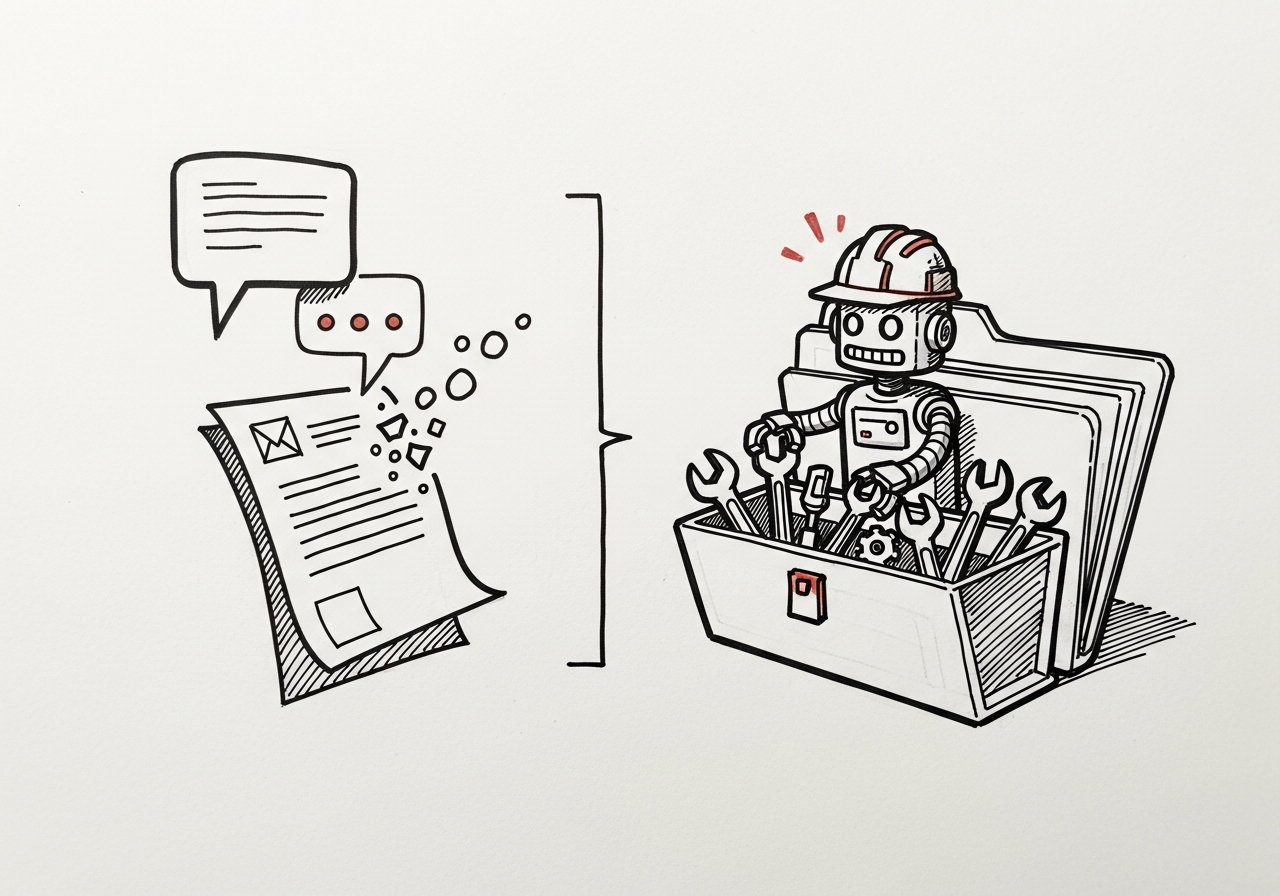
The easiest way to get the shape of Claude Code is to contrast it with what most people already know: ChatGPT, or a chatbot window in a browser. Those are great at conversation. You type a question, you get an answer. The assistant does not actually touch anything in your world. It is read-only, and it lives in its own tab.
Claude Code sits in the developer's terminal (the text-based command window engineers work in) and reads the real files on the project. It can open them, change them, run the tests, commit the change to the project's history, and loop back to fix anything that broke. People in the industry call this an "agent": an assistant that does not just answer, it acts. That is the distinction that matters. It is not another chat window. It is a pair of hands inside the actual work.
What to do: when someone says "we are using Claude Code," picture a junior teammate that can read the real codebase and make real changes, not a smarter autocomplete.
2. It has state, memory, and continuity
A chatbot has a conversation. Claude Code has a project. That is a meaningful difference.
It reads the rules of the house in a file called CLAUDE.md (literally a plain English text file that sits in the project folder). It follows the patterns the team has already set. It can look back at what changed last week. It can pick up a task, get interrupted, and continue the next morning. Over time, the team can teach it reusable disciplines (we call these "skills") such as "how we write a PRD" or "how we prep a sales call." Those stay with the project forever, not just with one conversation.
This is why the same model that feels underwhelming in a chat window feels like a completely different tool inside Claude Code. The intelligence is similar. The surface area is not.
What to do: ask your team where the team's rules and patterns are written down. If the answer is "in people's heads," that is the first thing to fix before Claude Code can carry real continuity for you.
3. Why it matters for the business, in one sentence

The business value of Claude Code is not "it writes code faster." That framing misses the point.
The real value is that it collapses the distance between deciding and shipping. A marketing request that used to be a ticket, a handoff, a sprint, and a deploy can now be a conversation on Monday and a live change on Tuesday, with the same review discipline around it. A designer's idea can reach production in an afternoon. A client question can be answered with a working prototype instead of a mockup. We have watched weeks of handoffs get compressed into a day, repeatedly, across every client we work with.
The teams that win with this are not the ones who type the fastest. They are the ones who can define what they want clearly, review what came back honestly, and keep shipping in small, reviewable pieces. That is a management discipline, not a coding skill.
What to do: when evaluating where Claude Code could help your business, look for the places where the handoff costs you the most time. That is where the leverage lives.
4. Where it fits, and where it does not
Claude Code is not a universal answer. It is very good at some things, okay at others, and wrong for a few.
It fits well when:
- You have a real codebase, a real repository, real tests.
- You have someone (an engineer, a technical founder, a capable designer) who can read the output and catch mistakes.
- The work is reviewable in small pieces.
It fits poorly when:
- There is no source of truth to ground it in. If the rules of the product live only in someone's head, the tool will guess, and its guesses will look plausible even when they are wrong.
- The work cannot be reviewed in chunks, such as giant one-shot rewrites, or decisions that depend on tacit context nobody wrote down.
- Nobody on the team has time to actually look at what came back. AI code that is never reviewed rots a codebase faster than hand-written code that is reviewed.
We have seen the failure mode up close: teams that treat Claude Code as a vending machine, press a button, get code, ship it. The first month feels great. The sixth month is a quiet mess of drift, subtle bugs, and duplicated logic that nobody understood when it landed. The tool is not the problem. The review loop is.
What to do: before adopting it anywhere, ask who will review what it produces, how often, and against what standard. If you cannot answer that, you are not ready.
5. The discipline is the product
This is the part that surprises non-technical leaders most. The fastest teams running Claude Code are not the ones with the most freedom. They are the ones with the most discipline.
Tight scope on each task. A written record of the rules (CLAUDE.md). Small changes, reviewed as they happen. Weekly demos to the people who asked for the work. Automatic checks (we call these "hooks") that stop bad changes from landing without a human looking. None of that is glamorous. All of it compounds.
We wrote more about this pattern in what a year of Claude Code trails tells you, but the short version is: the harness around the tool matters more than the tool. A median AI model with a disciplined team beats the frontier model running loose, every time we have measured it.
What to do: when your team brings you a plan for adopting Claude Code, ask about the review loop before you ask about the output. If the answer is vague, the output will be too.
6. What you should ask your team this week
You do not need to understand how any of this works under the hood to make good decisions about it. You need to ask a few pointed questions and listen for how clearly the answers come back.
Try these:
- Where in our week does a handoff cost us more than a day, and could Claude Code close that gap?
- What is our review loop for AI-generated work, and who owns it?
- Do we have a
CLAUDE.md(or equivalent) written down anywhere, or is every session starting from scratch? - What happened the last time we shipped something Claude Code wrote, and how did we know it was right?
If the answers are tight and specific, you have a team that understands the tool. If the answers are hand-wavy, you have a conversation to have before the next engagement starts.
What to do: treat Claude Code adoption as a management question, not a tooling question. The tool is already here. The discipline is what you choose.
The one-paragraph version
Claude Code is an AI assistant that works inside your actual codebase the way a junior teammate would: reading the real files, running real commands, committing real changes, carrying real context from one day to the next. It is different from a chatbot because it has a project, not just a conversation. It matters for the business because it collapses the time between deciding and shipping. It fits where you have code, people who can review the output, and the discipline to work in small pieces. Used well, it compresses weeks into days. Used without a review loop, it quietly makes things worse.
If you are about to bring this into your business, start with one team, one repo, and one clearly owned review loop. The rest follows from there.

%22%2F%3E%3Cpath%20d%3D%22M0%20110h1200M0%20375h1200M0%20640h1200M180%200v750M600%200v750M1020%200v750%22%20stroke%3D%22rgb(244%20241%20234)%22%20stroke-opacity%3D%22.13%22%20stroke-width%3D%222%22%2F%3E%3Crect%20x%3D%2288%22%20y%3D%2286%22%20width%3D%221024%22%20height%3D%22578%22%20fill%3D%22none%22%20stroke%3D%22rgb(244%20241%20234)%22%20stroke-opacity%3D%22.32%22%20stroke-width%3D%223%22%2F%3E%3Ctext%20x%3D%22110%22%20y%3D%22150%22%20fill%3D%22rgb(244%20241%20234)%22%20font-family%3D%22Montserrat%2C%20Arial%2C%20sans-serif%22%20font-size%3D%2228%22%20font-weight%3D%22800%22%20letter-spacing%3D%228%22%3ECLAUDE%20CODE%3C%2Ftext%3E%3Ctext%20x%3D%22110%22%20y%3D%22572%22%20fill%3D%22rgb(244%20241%20234)%22%20font-family%3D%22Montserrat%2C%20Arial%2C%20sans-serif%22%20font-size%3D%2276%22%20font-weight%3D%22900%22%3EBLACK%20FLAG%3C%2Ftext%3E%3Ctext%20x%3D%22110%22%20y%3D%22635%22%20fill%3D%22rgb(244%20241%20234)%22%20font-family%3D%22Montserrat%2C%20Arial%2C%20sans-serif%22%20font-size%3D%2252%22%20font-weight%3D%22700%22%3EJOURNAL%3C%2Ftext%3E%3CforeignObject%20x%3D%22110%22%20y%3D%22210%22%20width%3D%22940%22%20height%3D%22230%22%3E%3Cdiv%20xmlns%3D%22http%3A%2F%2Fwww.w3.org%2F1999%2Fxhtml%22%20style%3D%22font-family%3AMontserrat%2CArial%2Csans-serif%3Bfont-size%3A50px%3Bfont-weight%3A800%3Bline-height%3A1.02%3Bcolor%3Argb(244%20241%20234)%3Bletter-spacing%3A0%22%3EWhat%20a%20Year%20of%20Claude%20Code%20Trails%20Tells%20You%20About%20Your%20Team%3C%2Fdiv%3E%3C%2FforeignObject%3E%3C%2Fsvg%3E)
%22%2F%3E%3Cpath%20d%3D%22M0%20110h1200M0%20375h1200M0%20640h1200M180%200v750M600%200v750M1020%200v750%22%20stroke%3D%22rgb(244%20241%20234)%22%20stroke-opacity%3D%22.13%22%20stroke-width%3D%222%22%2F%3E%3Crect%20x%3D%2288%22%20y%3D%2286%22%20width%3D%221024%22%20height%3D%22578%22%20fill%3D%22none%22%20stroke%3D%22rgb(244%20241%20234)%22%20stroke-opacity%3D%22.32%22%20stroke-width%3D%223%22%2F%3E%3Ctext%20x%3D%22110%22%20y%3D%22150%22%20fill%3D%22rgb(244%20241%20234)%22%20font-family%3D%22Montserrat%2C%20Arial%2C%20sans-serif%22%20font-size%3D%2228%22%20font-weight%3D%22800%22%20letter-spacing%3D%228%22%3EPLAYBOOK%3C%2Ftext%3E%3Ctext%20x%3D%22110%22%20y%3D%22572%22%20fill%3D%22rgb(244%20241%20234)%22%20font-family%3D%22Montserrat%2C%20Arial%2C%20sans-serif%22%20font-size%3D%2276%22%20font-weight%3D%22900%22%3EBLACK%20FLAG%3C%2Ftext%3E%3Ctext%20x%3D%22110%22%20y%3D%22635%22%20fill%3D%22rgb(244%20241%20234)%22%20font-family%3D%22Montserrat%2C%20Arial%2C%20sans-serif%22%20font-size%3D%2252%22%20font-weight%3D%22700%22%3EJOURNAL%3C%2Ftext%3E%3CforeignObject%20x%3D%22110%22%20y%3D%22210%22%20width%3D%22940%22%20height%3D%22230%22%3E%3Cdiv%20xmlns%3D%22http%3A%2F%2Fwww.w3.org%2F1999%2Fxhtml%22%20style%3D%22font-family%3AMontserrat%2CArial%2Csans-serif%3Bfont-size%3A50px%3Bfont-weight%3A800%3Bline-height%3A1.02%3Bcolor%3Argb(244%20241%20234)%3Bletter-spacing%3A0%22%3EThe%20Black%20Flag%20Playbook%3A%20Six%20Principles%20for%20Shipping%20with%20AI%3C%2Fdiv%3E%3C%2FforeignObject%3E%3C%2Fsvg%3E)